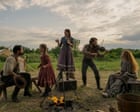
Like tradwifery for children, this revamp of the 19th-century settlers show is a precision-tooled and well-oiled machine. It’s a cosy world full of faith, hope and the American way
I never actually watched an episode of Little House on the Prairie, though it bestrode my late 70s-early 80s’ childhood like a ginghamed colossus. This is for the simple reason that Michael Landon’s bouffant hair frightened me. Bouffant hair is such a bad thing. But so great is the power of both the cultural cringe and osmosis that even the most militant Britisher of a certain age has absorbed to some degree the story of the pioneering Ingalls family and its on-screen aesthetic. For the younger folk – it’s tradwifery for children.
The series was of course based on the books (and named after the third in the series, which was published in 1935 and hasn’t been out of print since) by Laura Ingalls Wilder. They in turn were an account, shaped for a young readership, of her childhood spent moving across the American West in the 1870s and 80s, settling and resettling in different states as her parents sought their manifest destiny.