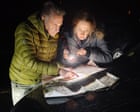

An Immersive theatre show tells the story of Britain’s abolitionist movement (Photographs by Paul Ashley)
What’s the play about?
Stuart Curlett: It’s essentially the people’s history of slavery abolition in the 18th century.
It tells the story of the grassroots campaigners that set up the Society for the Abolition of the Slave Trade.
It looks at how they campaigned tirelessly on the ground—postering, leafleting, travelling the country, leading boycotts and bringing challenges in courts and parliament.
Holly Maple: All the figures in the play are real people and a lot of the script is verbatim. I used a technique called “critical fabulation”. It blends verbatim, archival writings and critical theory with a narrative.
We wanted to tell stories of enslaved people whose lives were silenced or distorted by official records.
How did the play develop?
HM: It began in 2019 while I was working at Brunel University with Dr Inge Dornan. I’d previously done heritage performances engaging in troubled histories and untold stories.
We originally did the play with students in a church yard in Hillingdon, west London, where there’s the grave of a freed enslaved person—Tobias Pleasant.
At that time, a lot of people weren’t aware that there were black Britons in our communities before the 20th century.
Slavery was discussed as an American thing—but it is British. Around 80 percent of the global slave trade was the British slave trade.
We couldn’t tour until 2021 because of Covid-19. Then we performed at ten sites around England that had graves of freed or enslaved people or were related to the abolition movement.
Then we performed at ten sites in England that had graves of freed or enslaved people or were related to the abolition movement.
Between 2019 and the tour in 2021, the Black Lives Matter (BLM) movement erupted. The script stayed the same but the audience response changed. We had a lot of discussions and debates that came out of the BLM movement on the tour.
Who are some of the figures in the play?
SC: I play William Dickson, who was the private secretary to the governor of Barbados and saw the horrors of slavery.
He returned to Scotland after 13 years and converted to Quakerism. He published very passionate writing about abolition and devoted his life to the end of the slave trade.
Another key abolitionist in the play is Thomas Clarkson, from Cambridgeshire, who helped set up the Society. He was a tireless campaigner, travelling 7,000 miles across Britain to tell people about the cause. He also created the famous Plan of the British Slave Ship Brooks.
There’s another Quaker, Elizabeth Heyrick. She was famous for wanting abolition immediately, a much more radical demand than other abolitionists called for. She also pushed against the serious sexism in the movement.
And Joseph Knight was a former enslaved man from Jamaica forcibly brought to Scotland.
His personal fight for freedom changed Scottish law.
In the play, Knight sits in the audience listening to the abolitionists debate how to end the slave trade in the Caribbean. He stands up and asks them, “What are you doing to end slavery here in Scotland?”
HM: Knight fought back when his enslaver was going to sell him back to the West Indies. Knight at the time was living in Dundee and had a wife, Annie Thompson, and a child.
The people of Dundee paid his bail, workers who were as poor as he was. He was a member of their community.
Knight went through three legal cases to get his freedom—and he did this by tirelessly campaigning with the Scottish people.
Why did you want to take the play to Scotland?
HM: I had always wanted to take the show to Scotland, even back in 2019. At the start, I was researching places related to enslavement. I came to realise that if you throw a rock in this country, you hit the slave trade—it’s everywhere. This is true in Scotland too.
There were so many Scots involved in the slave trade. You see this in the names of Edinburgh streets and with the Glaswegian merchants.
I can’t even see buildings here the same way because the memory of the slave trade is British and Scottish memory.
There’s a big problem when you’re doing this sort of history theatre or work around the slave trade—we only have the words of the people who wrote them.
For example, Olaudah Equiano wrote this incredible narrative of his experience of being an enslaved person and his experience as an abolitionist.
But there are so many people who fought their own battles and lived within this system who couldn’t document it.
There’s just the amazing resilience in this survival that we don’t even have a record of.
Breaking the Silence also tells the story of the wider abolition movement which involved everybody—from children pushing the boycotts of sugar to the women running the petitions and campaigns.
SC: Glasgow was a huge slave port. It is a city built on slavery. If you want to talk about abolition, not mentioning Scotland would be remiss.
If we want to push forward the voices of former enslaved people, Knight was crucial in changing the law. Growing up in Glasgow, a lot of people don’t have this awareness of this history that goes right across Scotland.
Why do you think it’s an important play right now?
HM: Right now we can see how injustice builds wealth and power.
Anti-immigrant hatred comes from a system built to justify the oppression of others. And that comes from Western justifications of the slave trade.
We can see how these legacies still affect what we buy and sell now. For example, our phones are made from materials mined by people in Myanmar—who are pretty much enslaved people.
People talk to me after the play about white guilt. We have to get over guilt as a feeling and realise it is a responsibility to help people.
Abolitionists really show that you can go up against these enslavers, who were billionaires, and go up against that greed and money and the power of lobbyists—and win. It’s just extraordinary. We can do this if we do this together.
SC: Right now is the perfect moment. We’re witnessing the peak of the fascist movement in Britain and the normalisation of racism that was only a few years ago unacceptable.
The play is a reminder of what we’ve achieved and how we achieved it. It was done from the bottom up, not the top down.
We desperately need to fight racism and the far right in the same way today.
Breaking the Silence is being performed at the Govanhill International Festival at 6pm on 5-6 August, Queen’s Park Govanhill Parish Church, G42 8QZ
- For more details visit: https://bit.ly/4yEo00c