This exhibition’s Panafrica exists in a post-modernist relationship with the tradition of Pan-Africanism
The exhibition Project a Black Planet: The Art and Culture of Panafrica mixes artworks alongside artefacts from more than a century of Pan‑Africanism in a sometimes beguiling jumble.
It contains many fascinating and exciting works both from various African countries and the African diaspora.
These include all six of the monumental mural series The Art of the Negro by Hale Aspacio Woodruff, produced in 1950-51 for the historically black Clark Atlanta University in pre-civil rights Georgia. These proudly place black artists and culture at the heart of wider world history from ancient Egypt onwards.
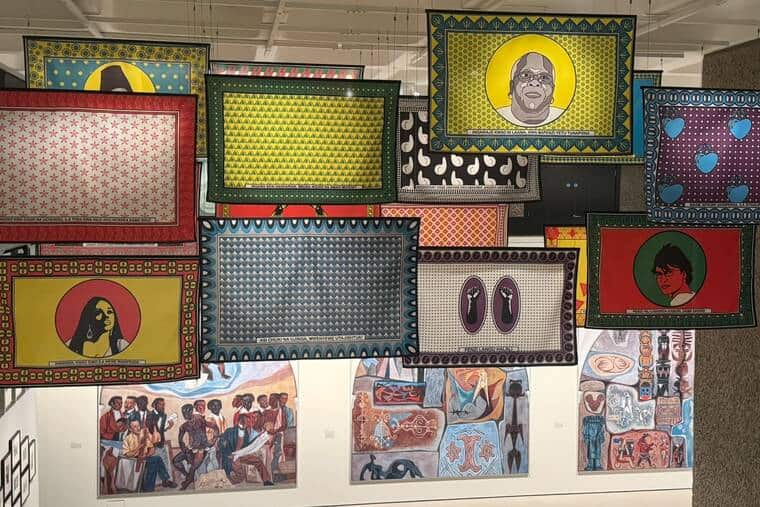
The exhibition has an impressive desire to foreground women, like British artist Lynette Yiadom‑Boakye, with her specially produced portraits.
Traditional Kenyan kanga cloths have been repurposed by Kawira Mwirichia to defend LGBT+ rights.
It is dotted with display cases featuring items from the history of the Pan-African movement. Pamphlets, books and portraits feature thinkers and leaders including Marcus Garvey, George Padmore, Amy Ashwood and Frantz Fanon. But why they are significant is only hinted at.
Much of the most engaging art is about specific experiences. Liz Johnson Artur’s video installation explores growing up black in south London over the past 60 years.
Bertina Lopes’s 1974 painting Fear Out of Memory evokes the horrors of Mozambique’s independence war. But you have to know the history to identify this.
Most historical works aren’t labelled with the artist’s country of origin, removing them from the events and experiences that inspired them.
The exhibition features lots of fascinating art from the African diaspora, but the confusion is reflected in its awkward title—what does Panafrica mean? It relates somehow to the Pan-African movement that grew from a series of congresses starting in 1900. This peaked with the call by
Kwame Nkrumah, first leader of independent Ghana, for African states to politically unite against imperialism.
This exhibition’s Panafrica exists in a post-modernist relationship with these projects, apparently embarrassed by the Pan-Africanists’ grand dream of changing the world.
It would never be possible to follow all the multidirectional cultural references from the African diaspora, but this exhibition sometimes seems to revel in making them obscure.
- The Art and Culture of Panafrica is on until 6 September at the Barbican, Silk St, London EC2Y 8DS