The attacks on September 11, 2001, unleashed a wave of Islamophobia in the United States that resulted in widespread harassment and persecution of Muslim Americans. In addition to vigilante attacks targeting Muslims or those perceived to be Muslim, there was also state repression including police roundups, community surveillance, prosecutions on often flimsy terrorism charges and mass deportations. Meanwhile, the wars launched by the United States in the aftermath of 9/11 have killed close to 1 million people in Afghanistan, Iraq, Pakistan, Yemen and elsewhere, according to the Costs of War Project at Brown University.
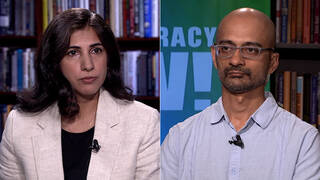
“There were so many responses to 9/11. One was obviously fear and grief and shock, but another was rage. And so much of that rage was towards Muslims and those who looked like Muslims,” says award-winning journalist Rozina Ali, author of Seasons of Fury: Four Families and the Rise of Islamophobia in America.
We also speak with Fahd Ahmed, executive director of Desis Rising Up and Moving, or DRUM, a grassroots organization for South Asian and Indo-Caribbean immigrant workers and families in New York City. He says that much of the anti-Muslim retaliation came from law enforcement.
“In New York City and in New Jersey and across the country, … we saw these massive roundups of mostly Muslim men or people that were perceived to be Muslim, and this included citizens, green card holders and undocumented people,” says Ahmed. “There was at least 1,200 men that were picked up this way.”