
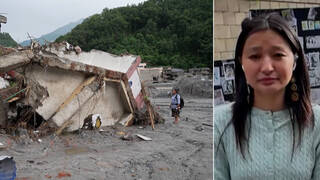
In the wake of devastating flash floods triggered by glacial collapse in the Himalayas, Nepal is demanding climate reparations from polluter countries as it embarks upon the grueling process of rebuilding. Over 1,400 bodies have been recovered from the disaster, with around 6,000 others still missing. Nepal’s government estimates that the cost of infrastructure reconstruction is likely to exceed $4 billion. Nepal contributes less than 0.1% of global carbon emissions, yet as a mountainous country surrounded by glaciers, continues to be vulnerable to the effects of climate change. Recent studies estimate that global surface temperatures will likely exceed 1.5°C above preindustrial levels by the end of the decade.
We go to a rally outside of United Nations headquarters, where Nepali activists, including our guest Anisha Buda, are demanding climate justice, reparations and a just transition out of fossil fuels. Buda, a member of the region’s ethnic minority Kaike-speaking Magar community, says that almost 90% of the victims impacted by August’s flash flooding were part of Nepal’s Indigenous communities. “It is not just the lives of the people lost. It’s not just the houses swept, but it’s their culture, tradition and their very identity that is being lost by the floods, by the climate-induced disasters.”