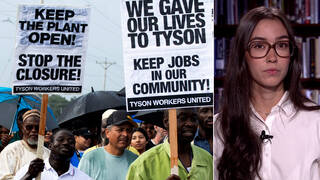
Tyson Foods, the largest U.S. meatpacking and processing company, shuttered a beef processing facility in Joslin, Illinois, last month, laying off more than 2,500 primarily immigrant workers “virtually overnight.” The company cites the historic cattle shortage as a primary reason for the closure. The U.S. cattle herd is at a 75-year low on account of climate change-induced drought in the American West, rising prices for diesel and fertilizer amid the U.S. war on Iran, and years of corporate consolidation that has driven down profits for cattle ranchers.
We speak to Caitlyn Clark, director of the group Essential Workers for Democracy, which is working to institute democratic reforms within the United Food and Commercial Workers International Union (UFCW), a labor union that represents more than a million workers across the United States. These workers include the former Tyson plant meatpackers, who worked in “some of the most dangerous jobs in America” while making “billions of dollars in profit for Tyson.” Tyson Foods CEO and President Donnie King made over $34 million last year, nearly 800 times more than the median Tyson worker.
Since they were suddenly laid off, former Joslin plant workers have been protesting outside the shuttered plant, calling on Tyson “to extend their severance pay, and calling on Illinois Governor JB Pritzker to intervene to help keep the plant open,” Clark tells us. “We need to take on the bosses and be serious about the level of inequality and exploitation that working people are facing today,” she adds. “Working people need more, they deserve more, and they’re ready to fight for it. It’s time that our union leadership catch up.”